Solution


Ophthalmic Laser Surgery

Ophthalmic laser procedures require precise and consistent positioning between the laser system and the patient’s eye. Force monitoring is essential. During testing phases before the lasers hit the market, the system must detect small changes in applied force while maintaining measurement stability despite temperature changes and the limited space available within the equipment.
Summary

  • Customer Need / Challenge

    Ophthalmic laser procedures require precise and consistent positioning between the laser system and the patient’s eye. Force monitoring is essential. During testing phases before the lasers hit the market, the system must detect small changes in applied force while maintaining measurement stability despite temperature changes and the limited space available within the equipment.

  • Interface Solution

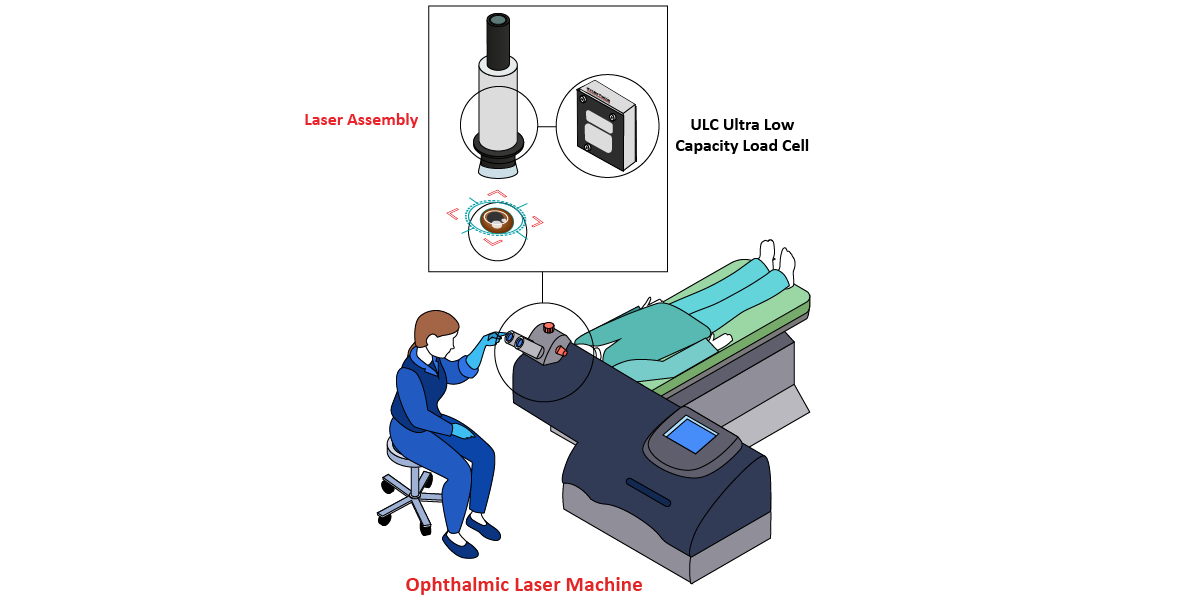
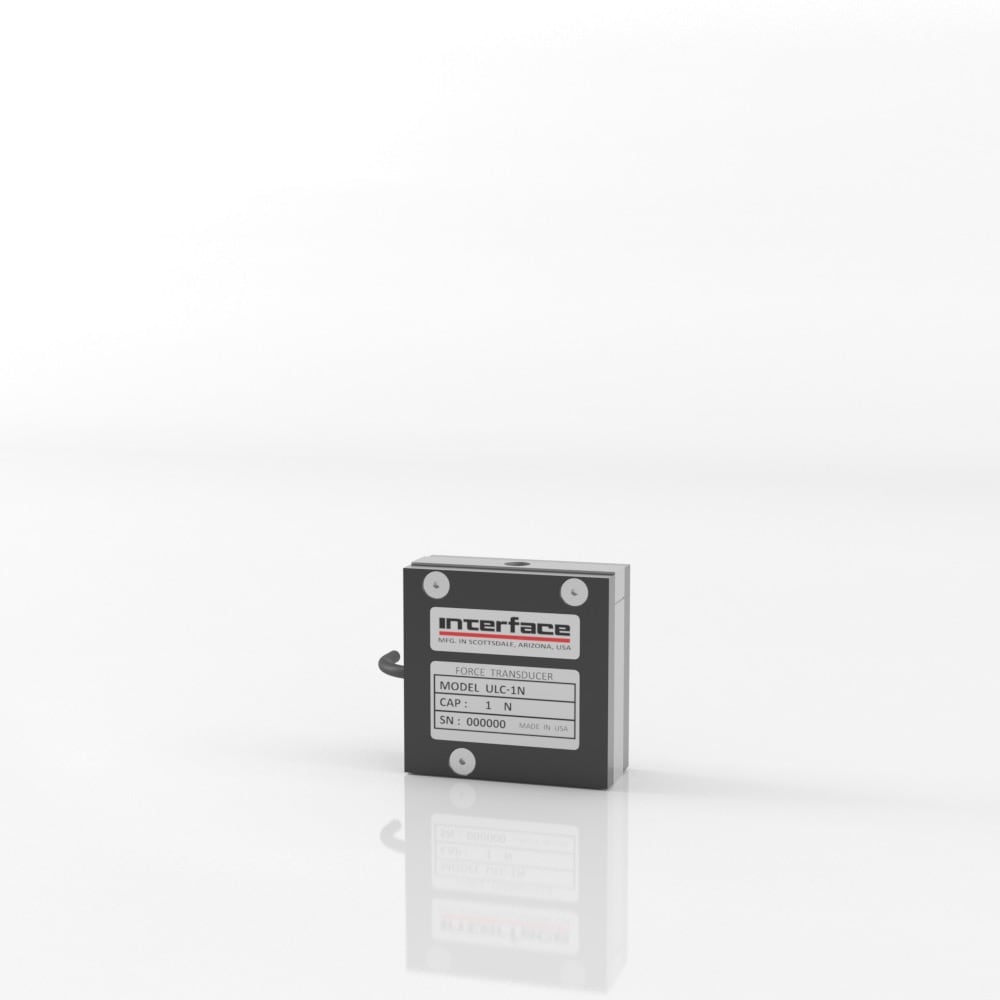
    Interface’s ULC Ultra Low Capacity Load Cell can be integrated in the mechanical connection between the laser and the eye. During testing phase, the laser assembly applies force to maintain contact with the eye, while the the ULC measures the axial compressive force transmitted through the patient interface to the cornea. This real-time force measurement provides feedback on the contact load, helping verify that the applied force remains within the required operating range.

  • Results

    The ULC enables sensitive measurement of patient-interface forces to help verify that applied pressure remains within the required operating range during ophthalmic laser procedures.

Materials


  • ULC Ultra Low Capacity Load Cell
  • Ophthalmic laser machine

How it Works


  1. During the testing phase, the ophthalmic laser’s contact point is positioned against the patient’s eye, with the contact lens establishing controlled contact with the cornea.
  2. As the laser assembly applies controlled pressure, the ULC Ultra Low Capacity Load Cell, positioned within this mechanical force path, measures the compressive force.

Download PDF